Monday, September 17, 2012

The Monastery of Tatev - Armenia !!


Tatev Monsatry (Tatev) is a masterpiece of confluence of ingenious medieval architecture and fabulous nature of Armenia. There is no doubt, that Tatev is one of the most spectacular tourist attractions on the Planet. Tatev was also widely regarded as one of the most famous spiritual and educational centers of the Middle Ages.

The Monastery of Tatev (Armenian: Տաթև) is a 9th century Armenian monastery located on a large basalt plateau near the Tatev village in Syunik Province in southern Armenia. It stands on a plateau on the edge of the deep gorge of the Orotan (Vorotan) River. It became the bishopric seat of Syunik and played a significant role in the history of the region as a centre for economic, political, spiritual and cultural activity.

In its day the monastery itself had a population of 1,000 and owned 680 villages.  A vast wealth.  It was a huge center of learning, art and culture.  The Tondrakians, a medieval Armenian hippie sect fought the church rule in widespread revolt, including those in villages belonging to Tatev, before finally being stamped out.  In 990AD, King Vasak even burned down Tsuraberd village to end their revolt.


The Sts. Paul and Peter church was built between 895 and 906. An arched hall was added adjacent to the southern wall of the Sts. Paul and Peter in 1043. Soon afterwards, in 1087, the church of St. Mary was added along the northern fortifications. In 1295, the church of St. Gregory, which had been destroyed during an earthquake, was replaced with a new one through the initiative of then Metropolitan Stepanos Orbelian. In 1787, the mausoleum of St. Grigor Tatevatsi was built adjacent to the western wall of the St. Gregory Church and in the end of 19th century a vestibule and bellfry were added at the west entrance of the Sts. Paul and Peter.

The monastery was seriously damaged after an earthquake in 1931, the dome of the Sts. Paul and Peter church and the bell tower were destroyed. In the latter years the Sts. Paul and Peter church was reconstructed, but the bell tower remains destroyed up to today.

Aside from the buildings, the monastery boasts an upright pendulum, known as the Gavazan (staff). This column was built in the tenth century following the completion of the Sts. Paul and Peter church and has survived numerous invasions and earthquakes relatively unscathed.

There is a lot to see at the Tatev Monastery, from churches to tombs to khachkars (cross stones) to medieval living quarters. Undoubtedly, your trip will be full of savory moments not to be forgotten.

Sunday, August 12, 2012

Battle at Krugur - Amazing Team work


In the Spring of 2007 what would become one of YouTube's hottest videos was posted, ‘The Battle at Kruger’. The clip, seen 35 million times and counting, captures an amazing predator encounter as lions and a crocodile fight over a buffalo calf in South Africa’s Kruger National Park.

The dramatic eight-minute clip that enthralled the world was filmed by an amateur whilst on safari. It’s the type of encounter that National Geographic filmmakers spend years trying to capture, with unexpected twists and turns of nature. In Autumn 2004, David Budzinski, a supply manager working for Chevron on a safari in Kruger National Park with friend Jason Schlosberg, filmed what could be some of the wildest footage ever seen. We take the men back to Kruger to recount the attack they witnessed.

This is the Battle at Kruger. This is an amazing battle between a pride of lions and a heard of buffalo. When the lions capture the baby buffalo, they think the battle is over - but really it's just begun. An army of buffaloes come back in a mobilized front to take the baby back. For good measure, a couple of crocodiles join the foray, but don't make much of an impact.

Taken from a vehicle on the opposite side of the watering hole, the video begins with the herd of buffalo approaching the water, unaware of the lions resting nearby. The lions charge and disperse the herd, picking off a young buffalo and knocking it into the water. While trying to drag the buffalo out of the water, it is grabbed by a pair of crocodiles, who fight strenuously for it before giving up and leaving it to the lions. The lions sit down and prepare to eat, but are quickly surrounded by the reorganized buffalo, who move in and start kicking at the lions. After a battle which includes one lion being tossed through the air, the baby buffalo (who is miraculously still alive) escapes into the herd. The emboldened buffalo chase the remainder of the lions away. It is not known if the youngster survived the ordeal.

Friday, February 10, 2012

Amazon Jungle - World's Most Unique and Mysterious Forest

The Amazon rainforest, also known as Amazonia, or the Amazon jungle, is a moist broadleaf forest that covers most of the Amazon Basin of South America. This basin encompasses seven million square kilometers (1.7 billion acres), of which five and a half million square kilometers (1.4 billion acres) are covered by the rainforest.

 The Amazon represents over half of the planet's remaining rainforests, and it comprises the largest and most species-rich tract of tropical rainforest in the world. The Amazon rainforest was short-listed in 2008 as a candidate to one of the New7Wonders of Nature by the New Seven Wonders of the World Foundation.

Amazon River
The Amazon Basin is the planets largest reservoir of fresh water. One fifth of all running water on the planet flows through the Amazon

The Amazon River is 6,868 km (4000 miles) long, the same distance as North Cape (Honningsvåg - Norway) to Las Palmas (Canary Islands - Spain), a trip that will take you 4 days and 5 hours if you are traveling by car and don't stop to eat and sleep (Ship from Cadiz to Las Palmas).

Special Things about Amazon Jungle
One hectare in the Amazon rainforest has been calculated to have a value of $6.820 (USD) if intact forest is sustainable harvested for fruits, latex, and timber; $1.000 (USD) if clear-cut for commercial timber (not sustainable harvested); or $148 (USD) if used as cattle pasture. In money, the Amazon rainforest should be worth USD 4.092.000.000.000 if sustainable harvested or only 2% of that number if used as cattle pasture.

For the global climate (and you) the Amazonian rainforest has a much bigger value. The Amazonian rainforest is estimated to accumulate 0.62 ±0.37 tonnes of carbon per hectare, per annum. Approximately, 300 million tons, but the logging and deforestation of the Amazon produces 200 million tons of CO2 every year, so a sustainable harvesting of the resources in the Amazon would really make a big difference for the global climate.

The Startling Diversity of Life
  • The Amazon is one of the richest areas in the world in animal and plant diversity.
  • There are more plant species in one hectare in Amazon than the whole of Europe.
  • Over 200 species of trees can be found on one hectare in the Amazon region.
  • One tree has been shown to have 72 different species of ants living in it.
  • There are about 30 times more fish species in the Amazon river than in all European rivers.
The diversity and contrast of life in the Amazon rainfores
  • The Amazon Water Lily (Vitoria-Regia) is the biggest flower in the world with a diameter of two meters
  • The caranguejeira spider is bigger than a baseball.
  • One species of monkey weighing 130 grams is about the size of a toothbrush. 
  •  World's Longest Snake of 30meter length was found in amazon jungle only.
Yet, the range of plant and animal species in Amazon remains largely unknown.Scientists estimate that only 40 % of all insect species have so far been identified. Over 30,000 species of plants have been identified so far but another 20, 000 are estimated to remain undiscovered. Only during the 1990's seven species of monkeys, two species of birds and dozens of species of frogs and fish have been discovered.

Wednesday, March 16, 2011

Weired Things About Animals

There are presently over a million animal species upon planet earth. The reptiles have 6,000 species crawling in their habitats; and more are discovered each year. There are over 70,000 types of spiders spinning their webs in the world. Well, there are 3,000 kinds of lice. Yes, it is the lice we are prone to get due to lack of hair hygiene. This is a mind-boggling fact – for each of the 600 million people there is about 200 million insects crawling, flying.... Mammals are the only creatures that have flaps around their ears. The world has approximately one billion cattle, of which about 200 million belong to India.

Now some weird things about all these species:

  • The life of a housefly is only 14 days.
  • A dog was the first animal to up in space.
  • A sheep, a duck and a rooster were the first animals to fly in a hot air balloon. The oldest breed of a dog known to mankind is the ‘Saluki’.
  • An ostrich is the fastest bird and can run up to 70 km/h.
  • Never get a camel angry, for he or she will spit at you.
    • There are crabs that are the size of a pea. There are known as ‘Pea Crabs’.
    • The lifespan of 75 percent of wild birds is 6 months.
    • Denmark has twice as many pigs as there are people.
    • You do not need cotton buds to clean a giraffe ears. It can do so with its own 50cm-tongue.
    • Want to known the appetite of a South American Giant Anteater? Well it eats over 30,000 ants, per day.
    • The sailfish can swim at the speed of 109 km/h, making it the fastest swimmer.
    • The Sea Horse is the slowest fish, drifting at approximately 0.016 km/h.
    •  Elephants are the only animal that can't jump.
    • The small car on the road is probably the size of the heart of a blue whale.
    • The length of an elephant is the same as the tongue of a blue whale.
    • The crocodile's tongue is unmovable, as it is attached to the roof of its mouth.  
    • Emus and kangaroos cannot walk backwards.
    •  The smallest bird in the world is the Humming Bird. 
    • The praying mantis is the only insect that can turn its head 360 degrees.
    •  Armadillos, opossums and sloths spend up to 80 percent of their lives sleeping.
    • The Basenji is the only dog which does not bark.
    • The strongest animal in the world is the rhinoceros beetle. It can lift 850 times its own weight.

    Saturday, September 4, 2010

    Leshan Giant Buddha (Leshan Dafo)

    The Leshan Giant Buddha (or Leshan Dafo) is a statue of Maitreya (a Bodhisattva usually represented as a very stout monk with a broad smile on his face and with his naked breast and paunch exposed to view) in sitting posture.
    The Buddha is located to the east of Leshan City, Sichuan Province, at the confluence of three rivers, namely, Min River, Qingyi River, and Dadu River. The statue makes itself the most renowned scenic spot in Leshan City. In December, 1996, the location of the Buddha was included by UNESCO on the list of the World Heritage sites. 

    History of  Leshan Giant Buddha
    Begun in the year 713 in the Tang Dynasty, and finished in the year 803, the statue took people more than 90 years to carve. During these years, thousands of workers had expended their efforts and wisdom on the project. As the biggest carved stone Buddha in the world, Leshan Giant Buddha is featured in poetry, song and story. Facing the river, the Buddha has symmetrical posture and looks which have been beautifully captured in its solemn stillness. It is 71 meters (about 233 feet) high, and has three-meter-long (about 11 feet) fingers. The eight-meter-long (about 27 feet) instep is big enough for one hundred people to sit on and the 28-meter-wide (about 92 feet) shoulder is large enough to be a basketball playground.
    It was a monk called Hai Tong who initiated the project. His concern was for the safety of the long-suffering people who earned their living around the confluence of the three rivers. Tempestuous waters ensured that boat accidents were numerous and the simple people put the disaster down to the presence of a water spirit. So Hai Tong decided to carve a statue beside the river thinking that the Buddha would bring the water spirit under control. Besides, the fallen stones dropped during the carving would reduce the water force there. After 20 years' begging alms, he finally accumulated enough money for the plan. When some local government officials had designs on tempting this amount of money, Hai Tong said that they could get his eyeball but not the money raised for the Buddha. After Hai Tong dug out his eyeball, these officials ran away scared. The project was half done when Hai Tong passed away, and two of his disciples continued the work. After a total of 90 years' hard work, the project was finally completed.

    Build of  Leshan Giant Buddha
    The charm of the Buddha lies not only in its size but also in its architectural artistry. There are 1,021 buns in the Buddha's coiled hair. These have been skillfully embedded in the head. The skill is so wonderful that the 1,021 buns seem integral to the whole. Another architectural highlight is the drainage system. This system is made up of some hidden gutters and channels, scattered on the head and arms, behind the ears and in the clothes. This system, which helps displace rainwater and keep the inner part dry, plays an important part in the protection of the Buddha.
    The large pair of ears, each seven meters (about 23 feet) long, is made of wood and is decorated by mud on the surface. For craftsmen of thousands of years ago, it was not easy to fix these to the stone head.
    Having such a long history and such worldwide fame, the renovation of the Buddha has received extensive attention both at home and abroad. The Buddha was nearly destroyed by the erosion of wind and rain before 1963 when the Chinese government began the repairing work. At present, the maintenance work is in progress under the instruction of experts from UNESCO.

    Thursday, May 6, 2010

    Statue of Christ, the Redeemer, Rio de Janeiro


    The statue is the symbol of Christianity and an icon of Rio and Brazil.  In Portugese, it is known as Cristo Redentor. The statue stands 39.6 metres (130 feet) tall, weighs 700 tons.

    Location:
    The Statue of Christ is located at the peak of the 700-m (2296-foot) Corcovado Mountain in the Tijuca Forest National Park.overlooking the city of Rio de Janeiro. ain Pináculo da Tentação (The Pinnacle [peak] of Temptation), alluding to the Biblical Mountain. 

    History:
    The Statue of Christ the Redeemer history starts in the XVIth Century when the Portuguese named the mountain Pináculo da Tentação (The Pinnacle [peak] of Temptation), alluding to the Biblical Mountain.

    A century passes and the mountain is re-baptized to Corcovado, a name derived from its form, which resembles a hump or hunchback. The next recordings of christ the redeemer history is in 1924 when Dom Pedro personally led the first official expedition to Corcovado Mountain, resulting in the opening of an accessable way up.
    .
    Then in 1859 the Vincentian father Pedro Maria Boss arrived Rio de Janeiro and was struck by the mystorious beauty of the corcovado mountain and suggested the the construction of a religous monument in honour of Princess Isabel, which in 1921 gave way for the idea of a great statue of christ viewable by all in the marvelous city of Rio. From 1859 to 1921, Dom Pedro gave his consent for the building of the Corcovado Railroad line between Cosme Velho and Paineiras, which would be an essential part of undertaking the Redentor
    In 1922, on the markation of Brazilian independence and a milepeal in the Statue of Christ the Redeemer history, the work began for fullfilling the ambisious project with the fundamental stone beeing put inplace on the 22.april.

    After a hard competition, the project by the engineer Heitor da Silva Costa is chosen and in September, a national fundraising campaign for the works is organized. 
    Finally, in 1927, the construction of the statue begins after models of diverse sizes had been constructed. All calculations were done by Coast Hisses, helped by Pedro Viana and Heitor Levy, which during the years of construction, resided in a shed of wood at the foot of the monument.  

    RAILROAD
    All the necessary work material and workers who participated in the construction of the Christ statue were transported to Corcovado by the trains from the railroad that links the street Cosme Velha, which today functions as a tourist train to the top. The train was the first in Brasil appointed exclusively to transportation of tourists and also the first train to work by electricity.
     

     INAUGURATION
    1931 – Is the famous year in the Statue of Christ the Redeemer history, where the monument is inaugurated on the 12 October. The final design of the monument was authored by the fine artist Carlos Oswald and the French Sculptor Paul Landowski was placed in charge of executing the sculpture. The monument to Christ, the Redeemer on the Corcovado mountain becomes the largest art déco sculpture in the world. Up till today, several reforms have been completed to ensure the quality of O Christo Redentor. Lighting has been added, and the latest renewal of September 2002 is the addition of a panoramic elevator and motorized staircase to ease the difficulty for elderly persons. ( It used to be a hard rise of 220 steps to get to the top )

    All the equipment, bought from the Elevators Otis, will be painted in green. They are manufactured in the France and they produce little noise. The elevators are “politically correct”, by the fact that they will not use oils lubricants in the system.

    Thursday, April 1, 2010

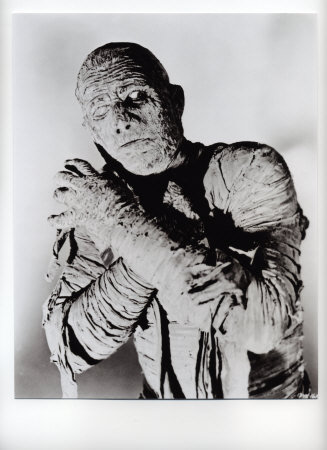
    Secret of Mummies


    The word mummy derived from early spectators who presumed that mummies were covered with bitumen, which meant in Persian moumia and therefore took the modern name mummy. Whether it’s been preserved naturally or deliberately, all mummies must survive the duration of time. Gaining most of its fame from Egypt, mummies also exist in many other ancient cultures and countries. Countries such as China revealed the Cherchen mummies, which were preserved almost perfectly. Another place, such as South America, revealed three children from the Incas who were relics of a sacrificial ritual and were found frozen atop Argentina’s Mount Llullaillaco, which is about 22,000 feet high.  Although mummification existed in other cultures, eternal life was the main focus of all Ancient Egyptians, which meant preserving the body forever.

    Mummification- How mummies were made
    The first attempt to preserve the dead is recorded as early as 3000 BC. After the death of an Egyptian, the embalmers where called by family members and the body was taken to the ibu, “the tent of purification.” the body would go through a process that lasted seventy days, no longer. Once brought to the ibu, the carcass was cleaned with water containing the purifying agent natron. This process represented the rebirth of the deceased.

    After being washed and cleansed, the carcass was taken to the wabet, the “palace of embalming.”According to Herodotus, a large incision was made on the left side of the abdomen. This incision, which was cut with a flint knife, was used for removing vital organs such as the intestines, liver, lungs and stomach.  

    After the body had been cleansed and the organs removed, the body is dried. For this large amounts of natron salt packed around the body until the 70th day, when the body was desiccated. After being dried in the bed of natron salt, the body is then washed and all traces of the salt removed.
    The cadaver is then taken to per nefer, “the house of beauty,” where it is stuffed and shaped back to its normal size. Many perfumes and oils were rubbed on the body and the open wounds were filled and covered with wax. Over the wax a metal plate decorated with symbols of protection sealed the wounds. After the anointing was completed, molten resin was added to cover the body. Both men and women would be colored with ochre. The men would be colored red and the women yellow. 
    Colored and stuffed, it’s was then ready to be wrapped. The wrapping process lasted fifteen to thirteen days. Special fine cloth with spells written upon them were used. Most of the time, sheets of linen were used as the main wrapping material. This process was done until the body was protected from head to foot in linen. After being covered, the body was covered with a death mask made of papyrus or linen and reinforced with plaster. Royal mummies, such as Tutankhamun’s, were made of gold and held precious and semiprecious stones that were inlaid. The mummy was then packaged and ready for the afterlife and was placed into its coffins and laid to rest in its tomb. 
    Related Posts with Thumbnails