Sunday, January 11, 2015

A Brief History of Singapore


If you are new to Singapore, you’re probably wondering how this small city-state in Southeast Asia with a total land area measuring only 273 square miles (707.1 square kilometers) and one of the youngest nations in the world became one of its most successful.
The answer lies in a unique set of geography and history – Singapore’s strategic location on the major sea route between India and China, its excellent harbor, and its free-trade harbor status granted by its visionary founder Sir Thomas Stamford Raffles. However, while Sir Stamford Raffles created the framework for Singapore’s early success, it was Singapore’s former Prime Minister Lee Kuan Yew who shaped the first quarter-century of Singapore’s existence as an independent nation and defined the path to its current success. What follows is a brief history of the country’s origins from a colonial outpost to the developed nation that it is today.

Mythical Origins

Recent studies have verified that lions have never lived on Singapore but legend has it that a 14th century Sumatran prince spotted an auspicious beast (probably a Malayan tiger) upon landing on the island after a thunderstorm. Thus, the name Singapore comes from the Malay words “Singa” for lion and “Pura” for city. Prior to European settlement, the island now known as Singapore was the site of a Malay fishing village and inhabited by several hundred indigenous Orang Laut people.

The Founding of Modern Singapore

In late 1818, Lord Hastings – the British Governor General of India – appointed Lieutenant General Sir Stamford Raffles to establish a trading station at the southern tip of the Malay peninsula.  The British were extending their dominion over India and their trade with China was expanding. They saw the need for a port of call to “refit, revitalize and protect their merchant fleet” as well as to prevent any advances made by the Dutch in the East Indies.
After surveying other nearby islands in 1819, Sir Stamford Raffles and the rest of the British East India Company landed on Singapore, which was to become their strategic trading post along the spice route.  Eventually Singapore became one of the most important commercial and military centers of the British Empire. The island was the third British acquisition in the Malay Peninsula after Penang (1786) and Malacca (1795). These three British Settlements (Singapore, Penang and Malacca) became the Straights Settlements in 1826, under the control of British India. By 1832, Singapore became the center of government of the three areas. On 1 April 1867, the Straights Settlements became a Crown Colony and was ruled by a governor under the jurisdiction of the Colonial Office in London.

Loosening Britain’s Stronghold

During World War II, Singapore was occupied by the Japanese.  British Prime Minister Winston Churchill described this “as the worst disaster and largest capitulation in British history”. In the aftermath of the war, the country faced staggering problems of high unemployment, slow economic growth, inadequate housing, decaying infrastructure, labor strikes and social unrest. Nevertheless, it sparked a political awakening among the local population and saw the rise of anti-colonial and nationalist sentiments, as epitomized by the slogan “Merdeka” which means “independence” in the Malay language.
In 1959, Singapore became a self-governing state within the British Empire with Yusof Bin Ishak as its first Yang de-Pertuan Negara (Malay for “Someone who is the eminent Master of the State”) and Lee Kuan Yew as its first and long-standing Prime Minister (he served until 1990). Before joining the Federation of Malaysia along with Malaya, Sabah and Sarawak, Singapore declared independence from Britain unilaterally in August 1963. Two years later, Singapore left the federation after heated ideological conflicts arose between the Singapore government’s major political party called the People’s Action Party (PAP) and the federal Kuala Lumpur goverment. On 9 August 1965, Singapore officially gained sovereignty. Yusof Bin Ishak sworn in as its first president and Lee Kuan Yew remained prime minister.
With independence came bleak, if not precarious economic prospects. According to Barbara Leitch Lepoer, the editor of Singapore: A Country Study (1989): “Separation from Malaysia meant the loss of Singapore’s economic hinterland, and Indonesia’s policy of military confrontation directed at Singapore and Malaysia had dried up the entrepot from that direction.” According to the same book, Singapore also faced the loss of 20 percent of its jobs with the announcement of Britain’s departure from the island’s bases in 1968.

Road to Success

Instead of demoralizing Singapore, these problems motivated Singapore’s leadership to focus on the nation’s economy. With Cambridge-educated lawyer Lee Kuan Yew at its helm, the Singaporean government was aggressive in promoting export-oriented, labor-extensive industrialization through a program of incentives to attract foreign investment. After all, Singapore still had its strategic location to its advantage.
By 1972, one-quarter of Singapore’s manufacturing firms were either foreign-owned or joint-venture companies, and both USA and Japan were major investors. As a result of Singapore’s steady political climate, favorable investment conditions and the rapid expansion of the world economy from 1965 to 1973, the country’s Gross Domestic Product (GDP) experienced annual double-digit growth.
With the economic boom of the late 1960s and 1970s, new jobs were created in the private sector.  The government provision of subsidized housing, education, health services and public transportation generated new jobs in the public sector. The Central Provident Fund, the country’s comprehensive social security scheme sustained by compulsory contributions by employer and employee, provided the necessary capital for government projects and financial security for the country’s workers in their old age.
By the late 1970s, the government changed its strategic focus to skill and technology-intensive, high value-added industries and away from labor-intensive manufacturing. In particular, information technology was given priority for expansion and Singapore became the world’s largest producer of disk drives and disk drive parts in 1989. In the same year, 30 percent of the country’s GDP was due to earnings from manufacturing.
Singapore’s international and financial services sector was and still is one of the fastest growing sectors of its economy accounting for nearly 25 percent of the country’s GDP in the late 1980s. In the same year, Singapore ranked with Hong Kong as the two most important Asian financial centers after Tokyo. By 1990, Singapore played host to more than 650 multinational companies and several thousand financial institutions and trading firms. On the political front, Goh Chok Tong succeeded Lee Kuan Yew and in 2004 Lee Hsien Loong, the eldest son of Lee Kuan Yew, became Singapore’s third prime minister.

Singaporean Identity

Out of 5.312 million Singaporeans, 3.285 million are Singapore citizens and roughly 0.533 million are Singapore permanent residents. Chinese, Malays and Indians comprise the three official ethnic groups in the country. With such a multi-ethnic population, the country’s leadership envisioned a Singaporean identity that calls for “rugged individualism with an emphasis on excellence”.

Summary

The island’s initial success resulted from its role as a conveniently located and duty-free entrepot for the three-way trade among China, India and the Malay archipelago. By the late 19th century, the British overloads of Singapore had extended their influence throughout the Malay peninsula and the port of Singapore acquired a rich hinterland of resources.
When the British failed to protect Singapore from Japanese occupation during World War II, they lost their credibility with the Singaporeans.  The aftermath sparked an outpouring of anti-colonial and nationalist sentiments. After the Merger with Malaysia and the subsequent separation, the former colonial port of Singapore become a leader in global financing and trading in the 1970s. Today, it continues to wittingly maneuver its way in the world of international trade, just as it had done in the 19th century, and a large part of that success is owed to its government’s pro-industrialization policies and excellence-oriented multi-ethnic people.

Tuesday, January 6, 2015

25 Pictures that will make you completely re-evaluate your existence

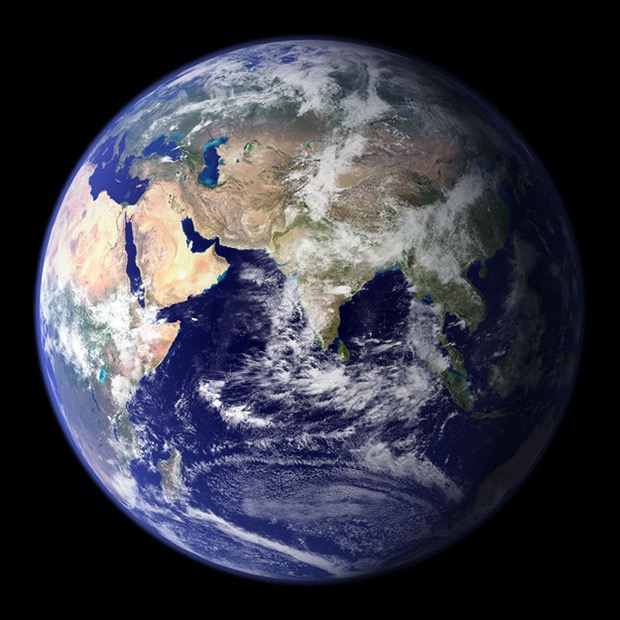
1. This is where we all live, our Earth.

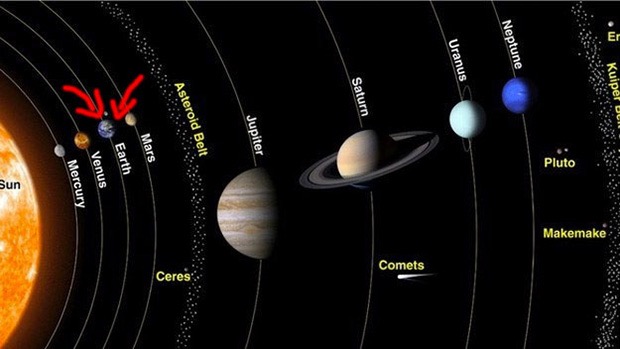
2. This the solar system, our “neighborhood”.

via: foxnews.com

3. This is the scaled distance between Earth and Moon. You thought the moon was farther?

we-are-tiny-24

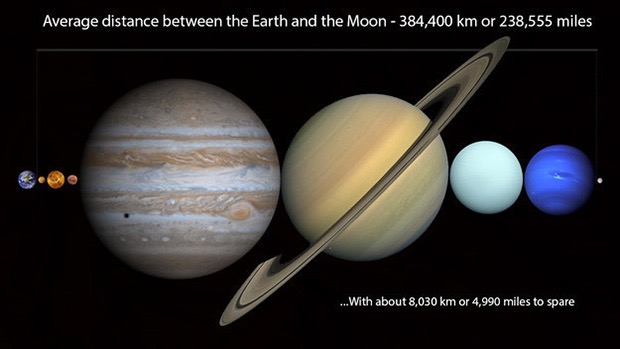
4. What if I told you that between Earth and moon you could fit every planet of our solar system?

via: reddit.com
via: reddit.com

5. If you still don’t have a measure of how tiny we are, here is North America compared to Jupiter.

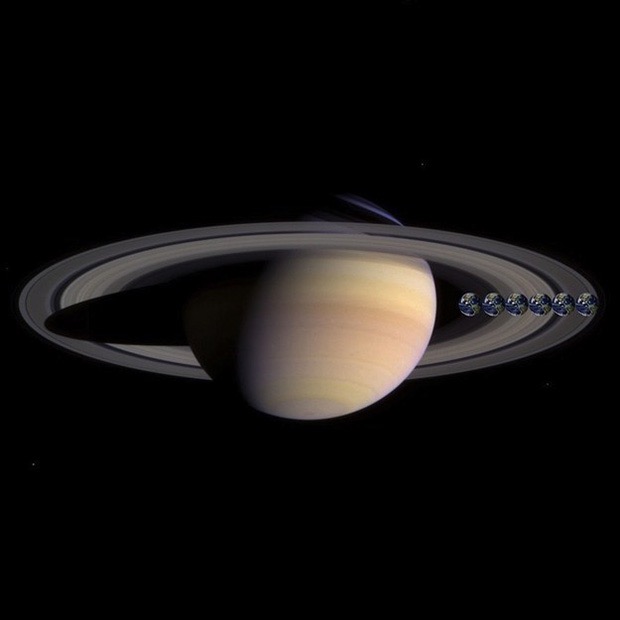
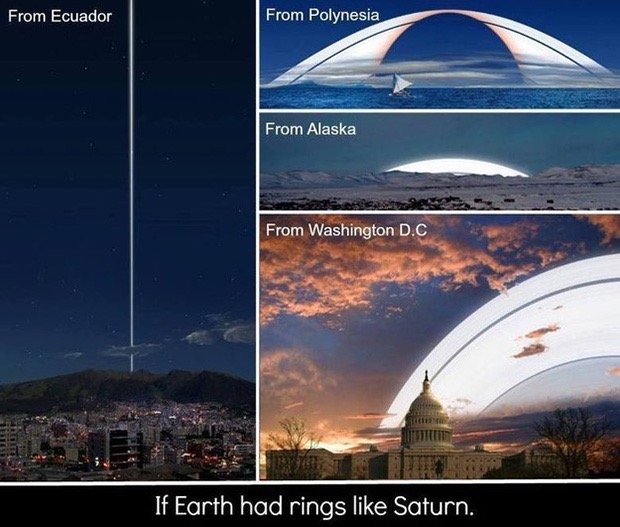
6. You could line up SIX Earths on the Saturn’s rings.

7. And here is how our sky would look like if Earth had rings like Saturn.

via: io9.com
via: io9.com

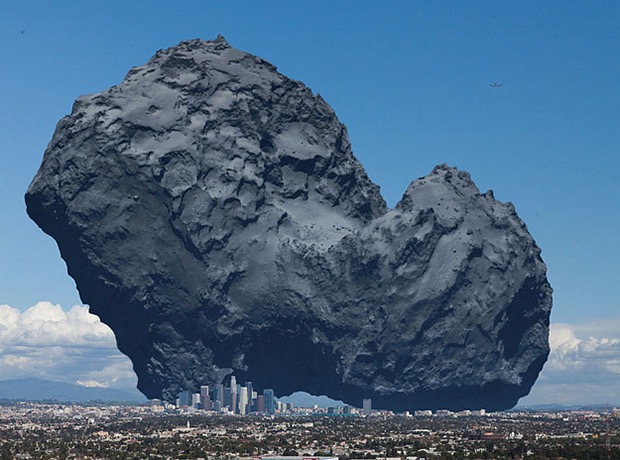
8. This is a comet, compared to Los Angeles. Big, isn’t it?

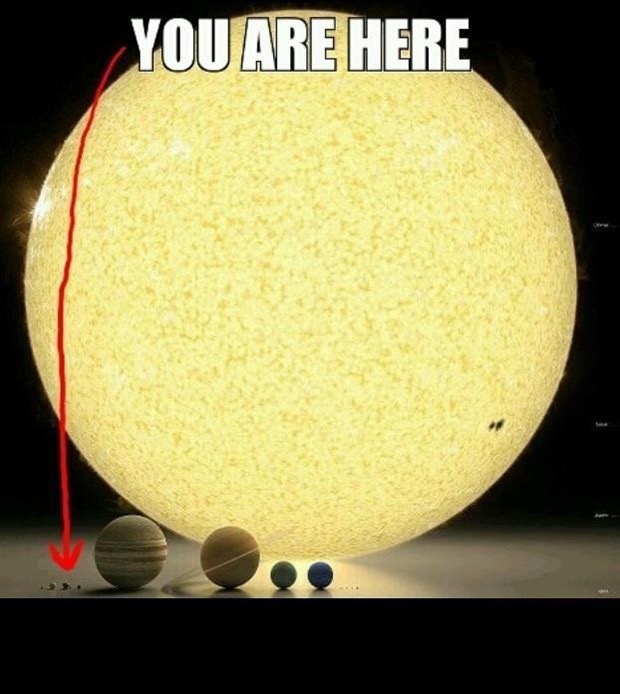
9. If that was big, here is the sun, and we are that tiny little point down there.

via: twitter.com

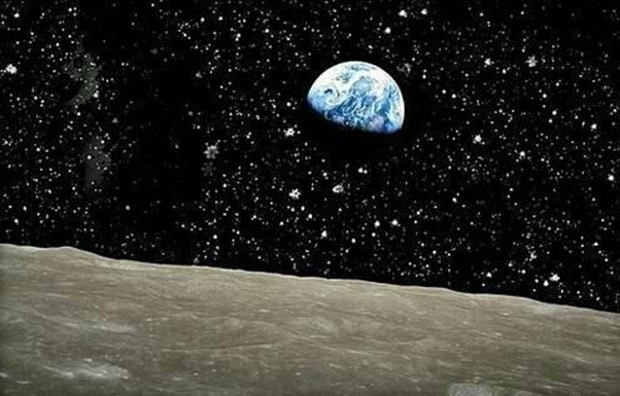
10. And here is how we look like from the moon.

NASA
NASA

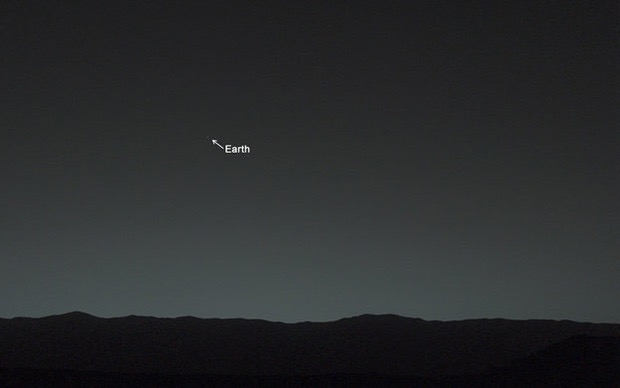
11. And from Mars.

NASA
NASA

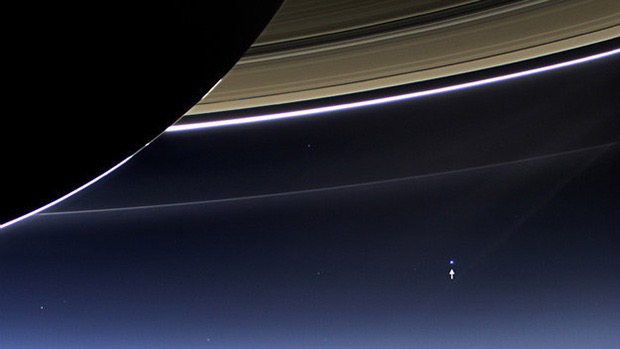
12. From Saturn.

NASA
NASA

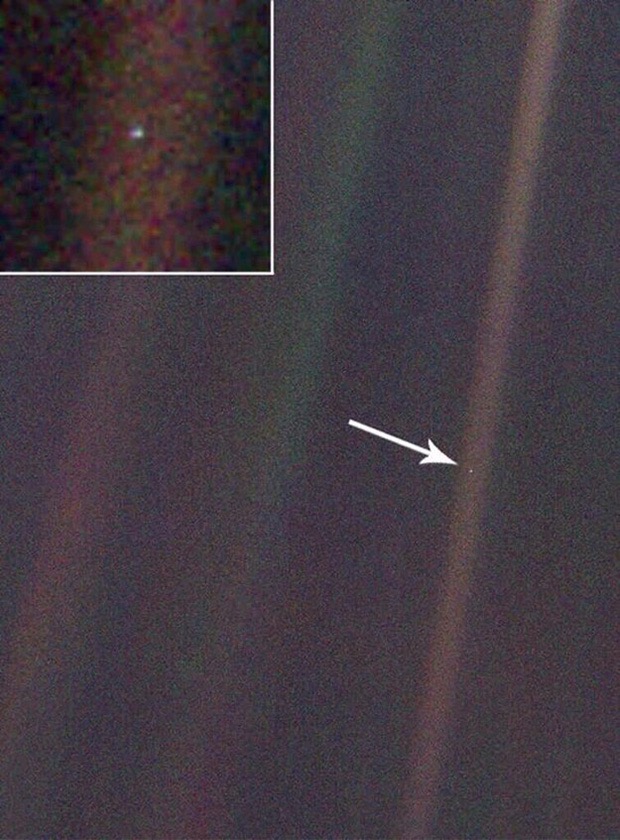
13. And from Neptune, 4 billion miles away.

NASA
NASA

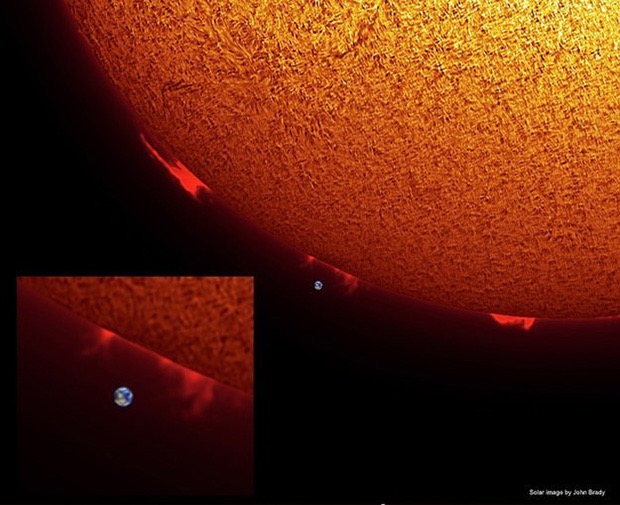
14. But let’s look again at how we look like compared to the sun. It blows my mind every time.

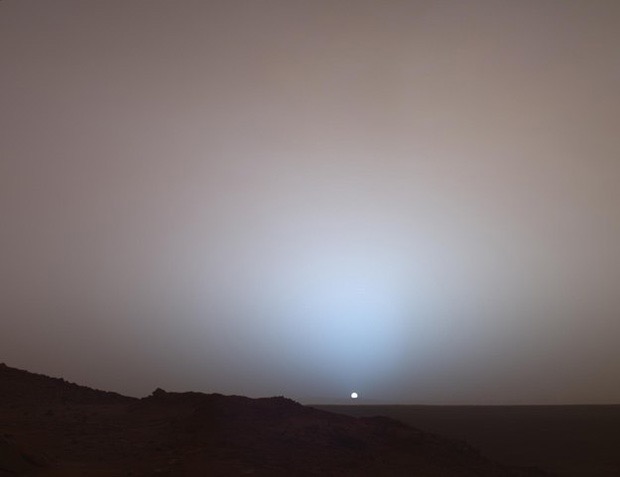
15. That little dot is the sun, seen from Mars.

NASA
NASA

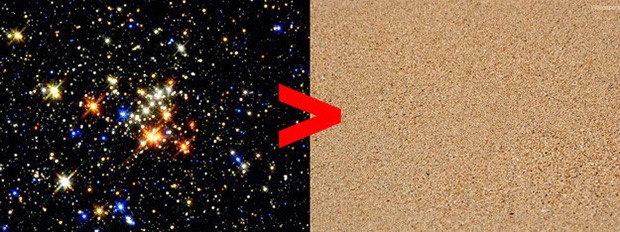
16. Did you know that there are more stars in space than there are grains of sand on every beach on Earth?

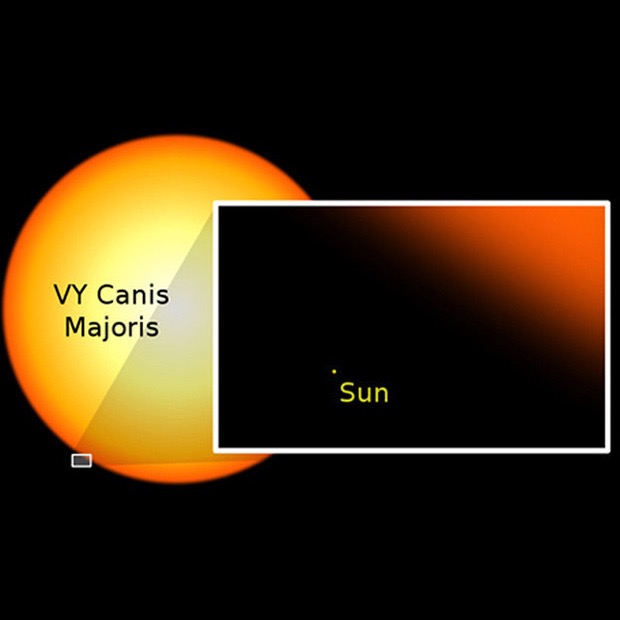
17. And between all these stars, many are much bigger than our sun. Take a look at how it looks compared to VY Canis Majoris.

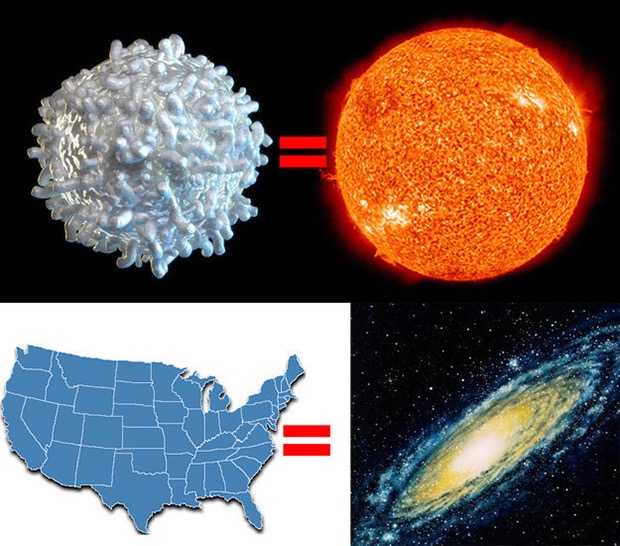
18. And galaxies are incredibly bigger. Just so you understand: if the sun was a blood cell, the Milky Way would be as big as the United States!

via: reddit.com
via: reddit.com

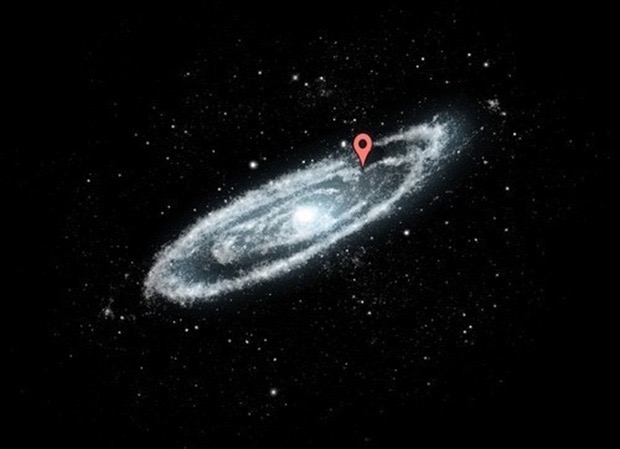
19. The Milky Way is enormous. Here is where we are inside it.

via: teecraze.com

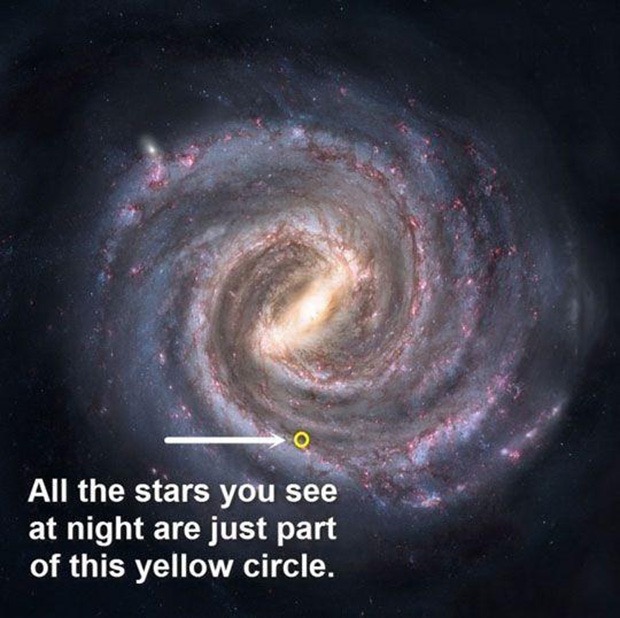
20. It’s mind blowing to think that all the stars we can see to the naked eye at night are just part of this yellow circle.

via: twitter.com

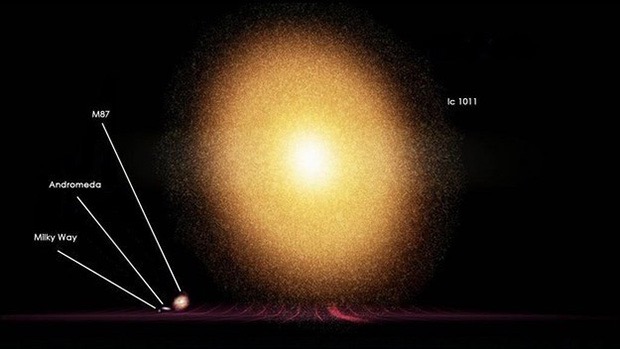
21. But don’t you ever think the Milky Way is the biggest galaxy in space. Here it is compared to Ic 1011!

via: twitter.com

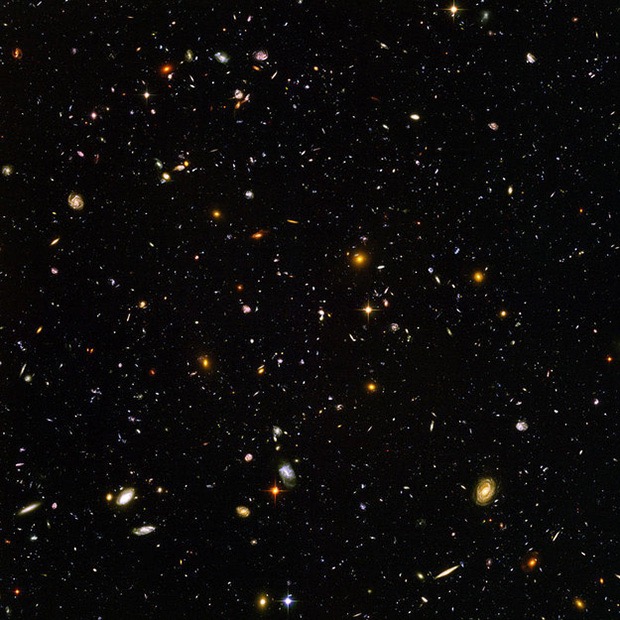
22. This is a picture taken from the Hubble telescope. In just this space there are millions of galaxies, each and everyone of them containing million of stars, each with planets orbiting around them.

23. This is one of these galaxies. It’s named UDF 423, and it’s 10 billion light years away. Do you know what this means? It means that it’s light takes 10 billion years to reach the Earth. Basically, by looking at this galaxy you are looking 10 billion years into the past!

via: wikisky.org

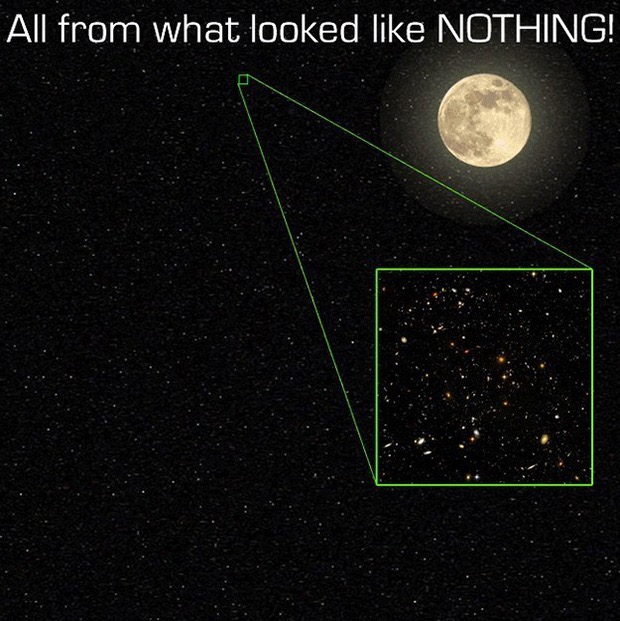
24. Keep in mind that every single inch of your vision of the night sky contains billions of galaxies, stars, planets.

via: thetoc.gr
via: thetoc.gr

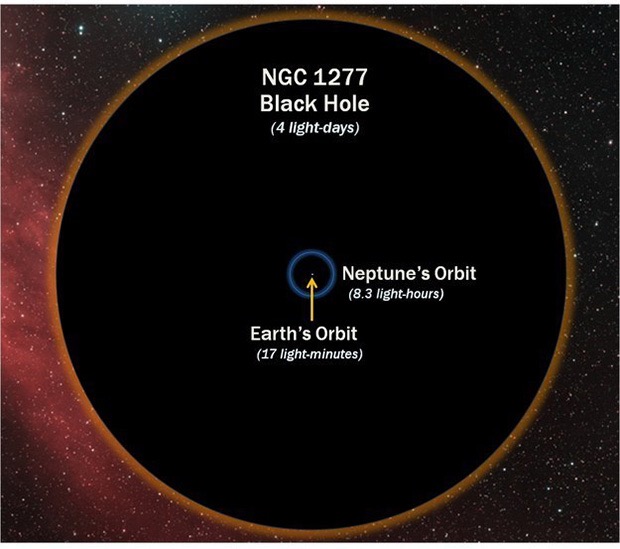
25. But it’s not all roses out there. Here is a black hole compared to our orbit. A black hole is a region of spacetime where gravity is so strong that no particle or light ray entering that region can ever escape from it.

So whenever you think about your life and existence, about the good and bad in this world, keep in mind that we are just a tiny, little dot lost in space. Just a little recap. This is where we live.

photo credits: Andrew Z. Colvin  (Own work) [CC-BY-SA-3.0], via Wikimedia Commons
photo credits: Andrew Z. Colvin (Own work) [CC-BY-SA-3.0], via Wikimedia Commons

This is how we look like in our solar system.

photo credits: Andrew Z. Colvin  (Own work) [CC-BY-SA-3.0], via Wikimedia Commons
photo credits: Andrew Z. Colvin (Own work) [CC-BY-SA-3.0], via Wikimedia Commons

And in our interstellar neighborhood.

photo credits: Andrew Z. Colvin  (Own work) [CC-BY-SA-3.0], via Wikimedia Commons
photo credits: Andrew Z. Colvin (Own work) [CC-BY-SA-3.0], via Wikimedia Commons

Our neighborhood compared to our galaxy.

photo credits: Andrew Z. Colvin  (Own work) [CC-BY-SA-3.0], via Wikimedia Commons
photo credits: Andrew Z. Colvin (Own work) [CC-BY-SA-3.0], via Wikimedia Commons

And how it looks like from farther.

photo credits: Andrew Z. Colvin  (Own work) [CC-BY-SA-3.0], via Wikimedia Commons
photo credits: Andrew Z. Colvin (Own work) [CC-BY-SA-3.0], via Wikimedia Commons

Let’s zoom out a little more.

photo credits: Andrew Z. Colvin  (Own work) [CC-BY-SA-3.0], via Wikimedia Commons
photo credits: Andrew Z. Colvin (Own work) [CC-BY-SA-3.0], via Wikimedia Commons

Some more.

photo credits: Andrew Z. Colvin  (Own work) [CC-BY-SA-3.0], via Wikimedia Commons
photo credits: Andrew Z. Colvin (Own work) [CC-BY-SA-3.0], via Wikimedia Commons

And here we are, here is the observable universe. Everything we said before fits in that little red dot. Impressive, right?

photo credits: Andrew Z. Colvin  (Own work) [CC-BY-SA-3.0], via Wikimedia Commons
photo credits: Andrew Z. Colvin (Own work) [CC-BY-SA-3.0], via Wikimedia Commons

Thinking about how tiny and insignificant we are compared to the universe totally blew my mind

Tuesday, November 18, 2014

World's Most Amazing Bridges

Sure, the idea of a bridge is simple: Get people from point A to point B. But designing bridges is a different animal altogether, with careful calculations and aesthetic components to consider - and every now and then, a team of architects achieves something truly incredible. These bridges from all around the world epitomize such accomplishments, from visually stunning structures to environmentally conscious features. 

Bridge of Strings in Jerusalem

Also known as the Chords Bridge, this bridge takes Jerusalem Light Rail's Red Line across the city and also has features that cater to pedestrians. Designed by Spanish architect and engineer Santiago Calatrava, the bridge is now a recognizable feature of the skyline. Upon the bridge's completion, Time Magazine dubbed it "Jerusalem's first shrine of modern design."

Henderson Waves bridge in SingaporePhoto: Lawrence Wee/Shutterstock

Henderson Waves in Singapore

Connecting two of Singapore's most beautiful parks, Henderson Waves is not only unique in its design: It's thehighest pedestrian bridge in the island country at 118 feet above the ground. Though it's a short walk from Mount Faber Park to Telok Blangah Hill Park, about 0.2 miles, it offers a memorable perspective — and shelter as well.

Rolling Bridge in LondonAll photos: Loz Pycock/Flickr

Rolling Bridge in London

The ingenious Rolling Bridge does exactly what its name implies: curl up when the inlet anchors a boat and roll back out for pedestrians to cross the Grand Union Canal in Paddington Basin, London. The truly unique concept was the brainchild of British designer Thomas Heatherwick. Though the bridge only uncurls on Friday afternoons, its octagonal structure makes for an intriguing sculpture during the other six days of the week.

Fire-breathing dragon bridgePhoto: Peera_stockfoto/Shutterstock

Dragon Bridge in Vietnam

Though it looks more like a theme park ride, this gold-colored dragon is actually a six-lane highway in Da Nang, Vietnam. Every night, the Dragon Bridge lights up with more than 2,000 LED lights — and actually breathes fire. Designed by American architecture firm The Louis Berger Group, it's a functional form of entertainment with truly spectacular displays. 

Spiral Nanpu BridgePhoto: zhangyang12576997233/Shutterstock

Nanpu Bridge in Shanghai

A fantastic nighttime spectacle, the spiral Nanpu Bridge crosses Shanghai's Huangpu River to connect the old city with the neighboring Pudong area. The circular design serves to reduce land use and meter cars' approach to the high bridge.

Moses Bridge in the Netherlands

In a moat that surrounds a 17th-century fortress at Fort de Roovre in Halsteren, the Netherlands, Dutch architects have created a bridge that takes pedestrians through the water. Made with eco-friendly materials, the Moses Bridge allows people to cross the water — without, of course, being eaten by crocodiles.

Helix Bridge in SingaporePhoto: Nataliya Hora/Shutterstock

The Helix in Singapore

A dizzying pedestrian bridge that spans the Singapore River in Marina Bay, this delicate structure appears to be a strand of DNA. Designed by Australian architecture firm Cox Group, international engineering firm Arup and the Singapore-based Architects 61 firm, the Helix bridge also serves as a gathering place and an art gallery. Several viewing points offer breathtaking views of the skyline and a unique perspective on events taking place in the bay.

Falkirk WheelPhoto: vichie81/Shutterstock

Falkirk Wheel in Scotland

This futuristic structure functions as a bridge as well as a boat lift, rotating 180 degrees as it carries boats via water-filled tunnels from the Forth and Clyde Canal to the Union Canal, and vice-versa. Despite its size, it only takes 1.5 kWh worth of energy to turn. The area surrounding the bridge has been dedicated to outdoor activities and educational workshops, with a water park to boot.

Langkawi Sky BridgePhoto: Kjersti Joergensen/Shutterstock

Langkawi Sky Bridge in Malaysia

This bridge will take your breath away: the Langkawi Sky Bridge on Pulau's Mount Mat Cincang is only accessible via cable car. At 2,000 feet above sea level, tourists can literally walk across the treetops and view the canopy like never before. The walkway spans more than 400 feet, with observation decks strategically placed to show off the 99-island archipelago of Langkawi in an epic panorama.

Kurilpa BridgePhoto: Steven Bostock/Shutterstock

Kurilpa Bridge in Australia

This gorgeous solar-powered pedestrian and bicycle bridge connects South Bank to the Central Business District in Brisbane, Queensland, Australia. It contributes not only to the city's artistic energy but also its actual energy. Its 84 solar panels, which can generate about 100 kWh per day, are connected to the city's power grid - so excess power can go back into the grid. Kurilpa Bridge connects the city to one of Australia's main art hubs, the Queensland Cultural Centre, and fittingly so: the bridge itself is an art display, outfitted with a dazzling system of LED lights (powered, of course, by the solar panels).

Floating Bridge in SeattleThe 520 Bridge in Seattle, Washington, from a view of about 1,500 feet up. (Photo: Jelson25/Wikimedia Commons)

Evergreen Point Floating Bridge in Seattle

The world's longest floating bridge, Evergreen Point Floating Bridge (also known as the Governor Albert D. Rosellini Bridge - Evergreen Point) crosses 1.4 miles over some of the deepest parts of Lake Washington. Supported by 33 bridge pontoons and 62 anchors, the "520 Bridge" connects SR 520 to Seattle. Opened in 1963, the bridge is nearing the end of its life as officials are beginning construction on a replacement.

Econtainer bridge designEcontainer photos courtesy of Yoav Messer Architects

Econtainer Bridge in Ariel Sharon Park

Designed to be made out of used shipping containers, the soon-to-be-built Econtainer Bridge will connect Israel's Route 461 to Ariel Sharon Park. The park itself emphasizes harmony between urban lifestyles and ecology - so naturally, this sustainable design won the contest to become the "gateway" to the park. Perfect for pedestrians, bikers and shuttles, the modular bridge will span 525 feet with plenty of space for folks to admire the scenery. And if that wasn't impressive enough for nature-lovers, the bridge will also feature photovoltaic solar cells which will illuminate the bridge and the surrounding area.
Related Posts with Thumbnails